
Bologna — La Rossa, La Grassa, La Dotta
A warm, earthy, food-centered city with a strong local identity. Terracotta buildings, medieval towers and endless porticoes, and a place where you could build an everyday routine instead of working through an itinerary.
Full video: Bologna, Italy | Is This a Place You’d Actually Want to LiveBologna, Italy | Is This a Place You’d Actually Want to Live
Getting Oriented in Bologna
Less monumental than Rome, less Renaissance than Florence, less touristy than Venice.
Bologna feels like a warm, earthy, intellectual and food-centered Italian city. Terracotta buildings, ochre façades, medieval towers and seemingly endless porticoes give it a distinctive look, and the architecture feels historic without making the whole city feel like an open-air museum.
There is a comfortable informality to it. Students gather in public squares, residents shop at neighborhood markets, friends meet for an aperitivo, and traditional restaurants sit alongside contemporary cafés and independent businesses. The university brings youthful energy, and generations of culinary tradition give the city a strong connection to its past.
Its appeal is often found in ordinary experiences: walking beneath the porticoes, stopping for coffee, buying fresh pasta and discovering another neighborhood square.
Bologna feels like a place where you could establish an everyday routine rather than simply work through a sightseeing itinerary. It becomes more rewarding the longer you stay.
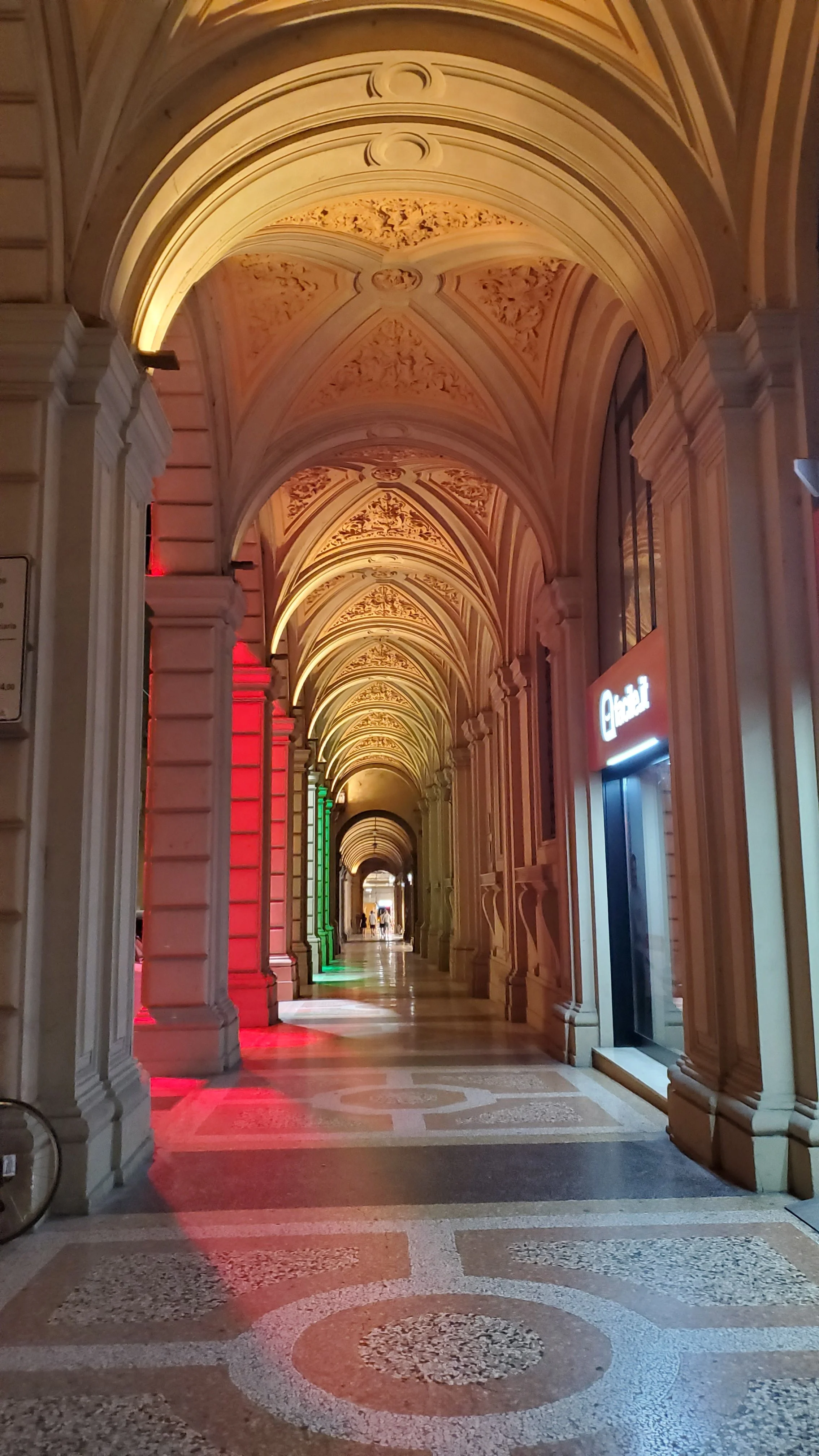
Terracotta and politics
Its terracotta rooftops, warm-colored buildings and historic political identity.
Food first
Its exceptionally rich culinary traditions.
An old university
Its centuries-old university and academic heritage.
Top 5 Things to See
From the main square to the hill above the city.
Piazza Maggiore and the Basilica of San Petronio
Piazza Maggiore is the historic and social heart of Bologna, surrounded by medieval palaces, cafés and impressive architecture. The Basilica of San Petronio dominates the square with its enormous, partially unfinished marble façade. It remains a gathering place for residents, students and visitors alike, and it is especially enjoyable in the early evening when people gather on the basilica steps and the surrounding buildings catch the warmer light.
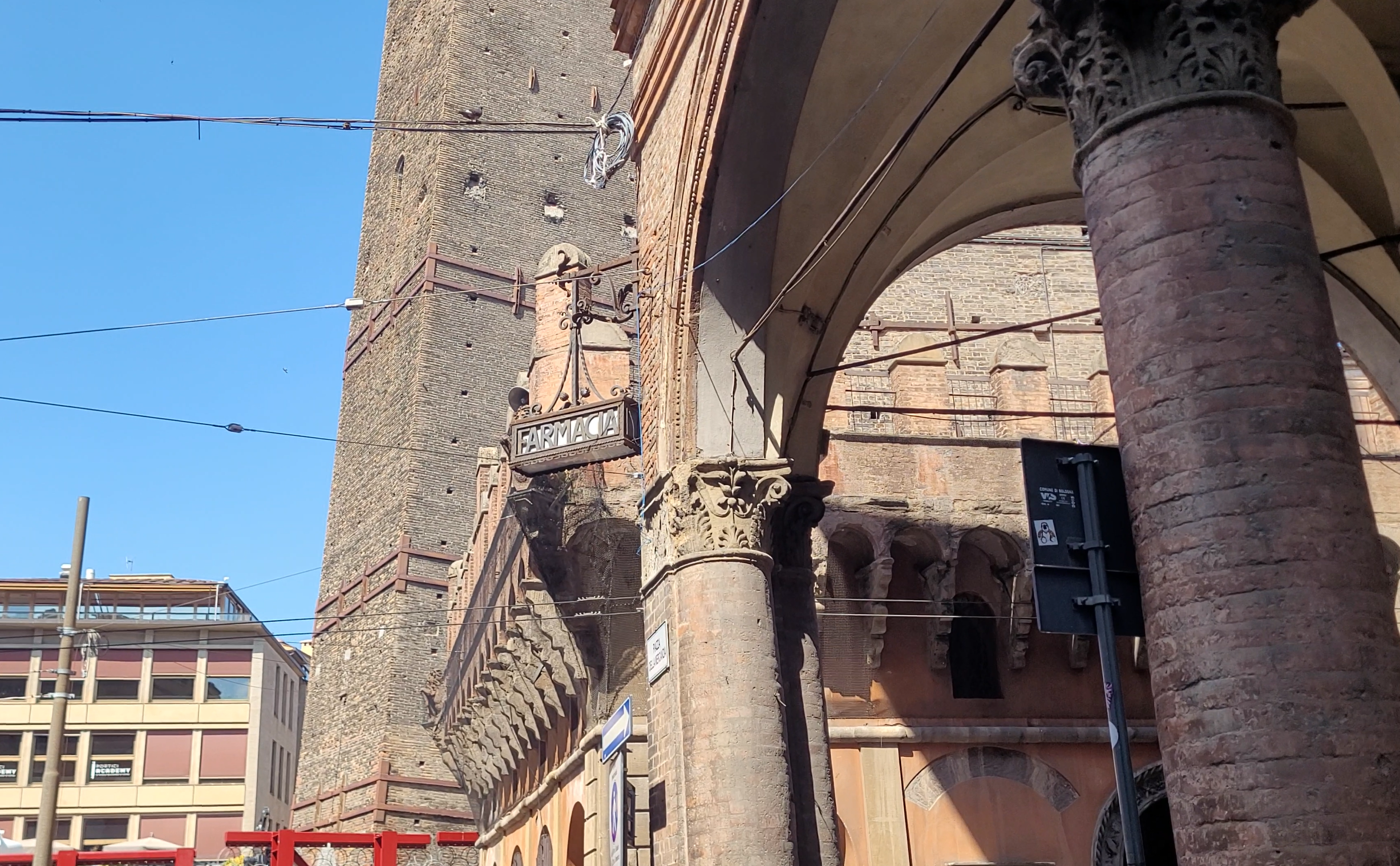
The Two Towers: Asinelli and Garisenda
Bologna’s most recognizable landmarks, and a reminder of the medieval era when wealthy families built towers as symbols of power and status. Both lean, though the shorter Garisenda has a considerably more pronounced tilt. They stand at the intersection of several historic streets, which makes them a natural reference point. Restoration and stabilization work can affect access to the towers and surrounding streets, so check current conditions.
The Porticoes of Bologna
The city’s extensive network of covered walkways is one of its most distinctive features, and includes sections recognized by UNESCO. They range from simple wooden medieval structures to elaborate stone arches and decorated ceilings. They also make Bologna exceptionally practical for walking in hot, rainy or cold weather, and they are part of everyday life rather than just a tourist attraction.
Sanctuary of the Madonna di San Luca
On a hill overlooking Bologna, connected to the city by a covered walkway of about 3.8 kilometers from Porta Saragozza. The route gradually becomes steeper, and the sanctuary has views across the surrounding countryside and hills. If you would rather not make the uphill walk, there is a tourist road train and other transportation.
The Santo Stefano Complex
Often called the Seven Churches: interconnected religious buildings, courtyards and chapels developed over several centuries. Its understated appearance contrasts with the grandeur of Bologna’s larger churches, and the triangular square around it is one of the city’s most attractive spaces. A good area to explore slowly, especially if you are interested in medieval architecture and history.
Top 5 Things to Do
Food shops, a pasta class, the university and the train station.
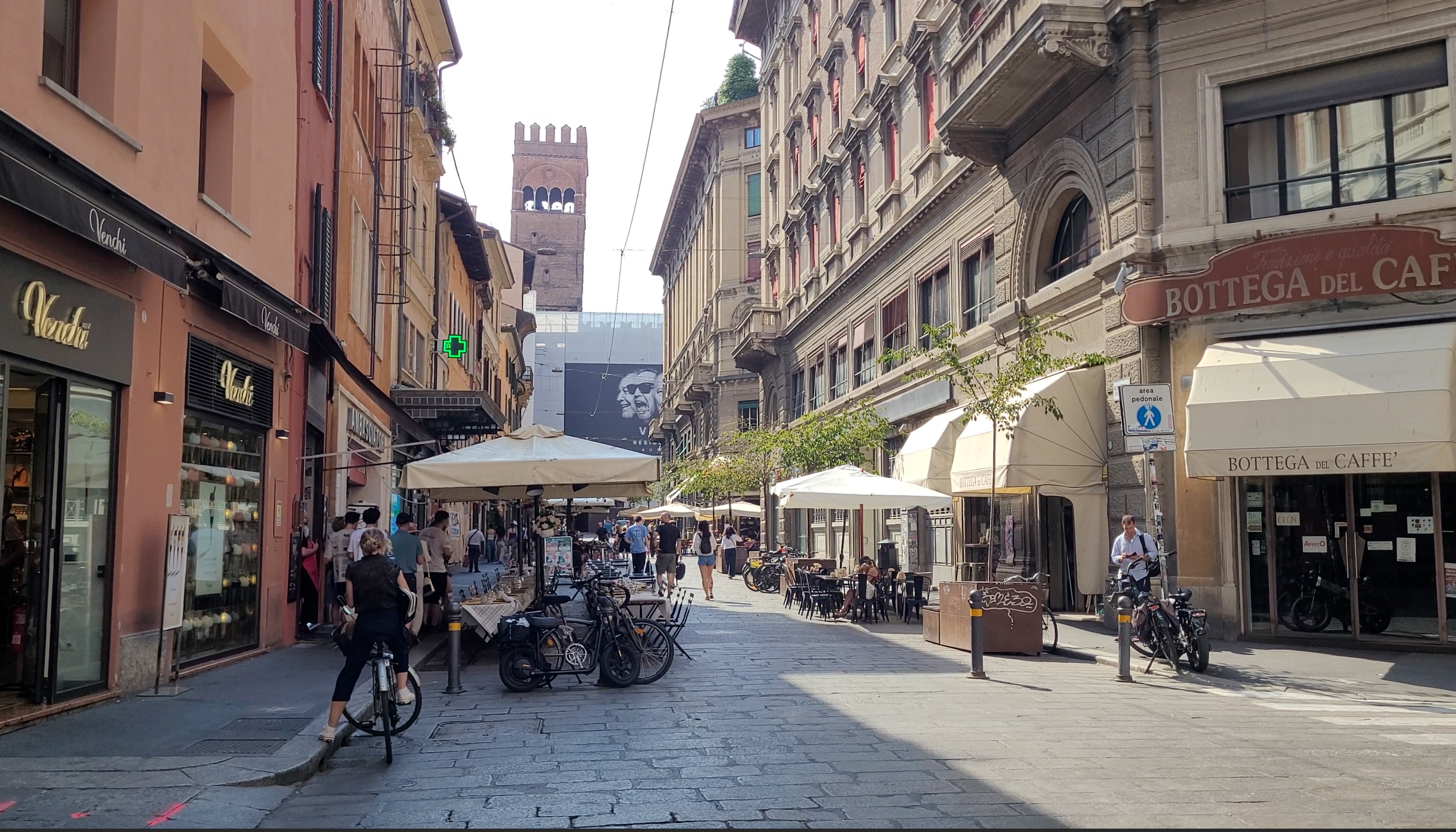
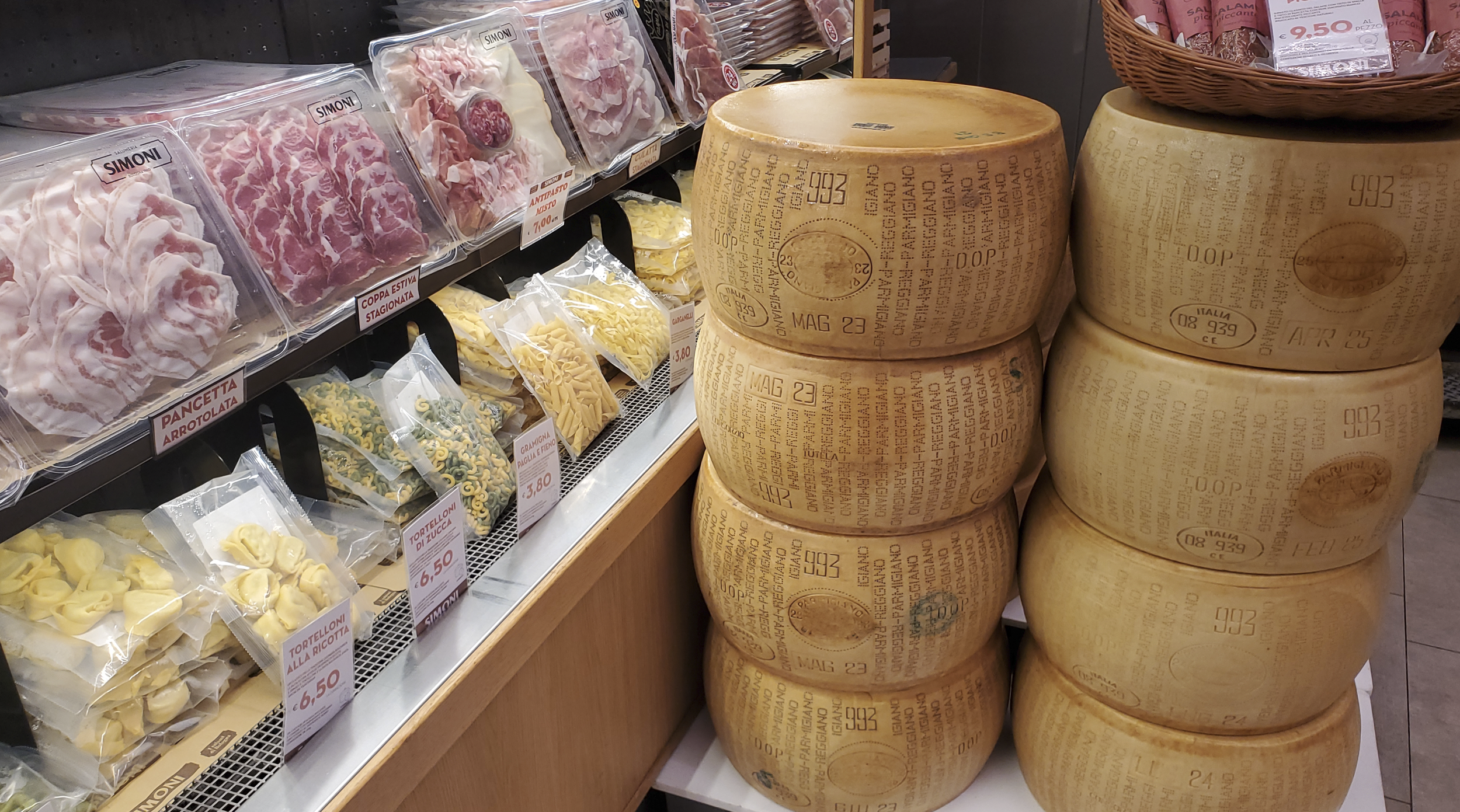
Explore the Quadrilatero food district
The narrow streets just east of Piazza Maggiore are one of Bologna’s oldest commercial districts. Traditional shops display fresh pasta, cured meats, cheeses, produce and regional specialties, alongside restaurants and wine bars. You can buy ingredients for an apartment meal, put together a picnic or stop for an aperitivo. It is busiest around lunchtime and early evening, so go in the morning if you want to browse.
Take a traditional pasta-making class
Bologna is an excellent place to learn how egg pasta is made by hand. Classes commonly focus on rolling dough, shaping tortellini and cutting tagliatelle, and many finish with a meal of the pasta you made. It gives you a better appreciation of the work behind the dishes served across the region.
Discover the university district
The university was founded in 1088 and is widely regarded as the oldest continuously operating university in the Western world. The surrounding neighborhood is younger and more informal, with inexpensive restaurants, bookstores, cafés and lively public spaces. The historic Archiginnasio and its wooden Anatomical Theatre show the city’s academic history, and this part of town helps explain why Bologna feels so different from many other historic Italian destinations.
Settle into an aperitivo
Early evening is the time to sit down at a café or wine bar. A drink might come with olives, cured meats, cheese or small savory snacks, depending on the place. Via del Pratello, Santo Stefano and the Quadrilatero each have a different atmosphere and price point. It is an easy way to take part in the city’s social life without committing to a formal restaurant meal.
Use Bologna as a base for day trips
The central railway station makes Bologna one of northern Italy’s most convenient places to explore without a car. Modena, Parma, Ferrara, Reggio Emilia, Faenza and Florence are all reachable by train, and Dozza, Brisighella and Mantua are possible with more planning. On a longer stay, you can see much of Emilia-Romagna without changing accommodations.
Top 5 Things to Eat
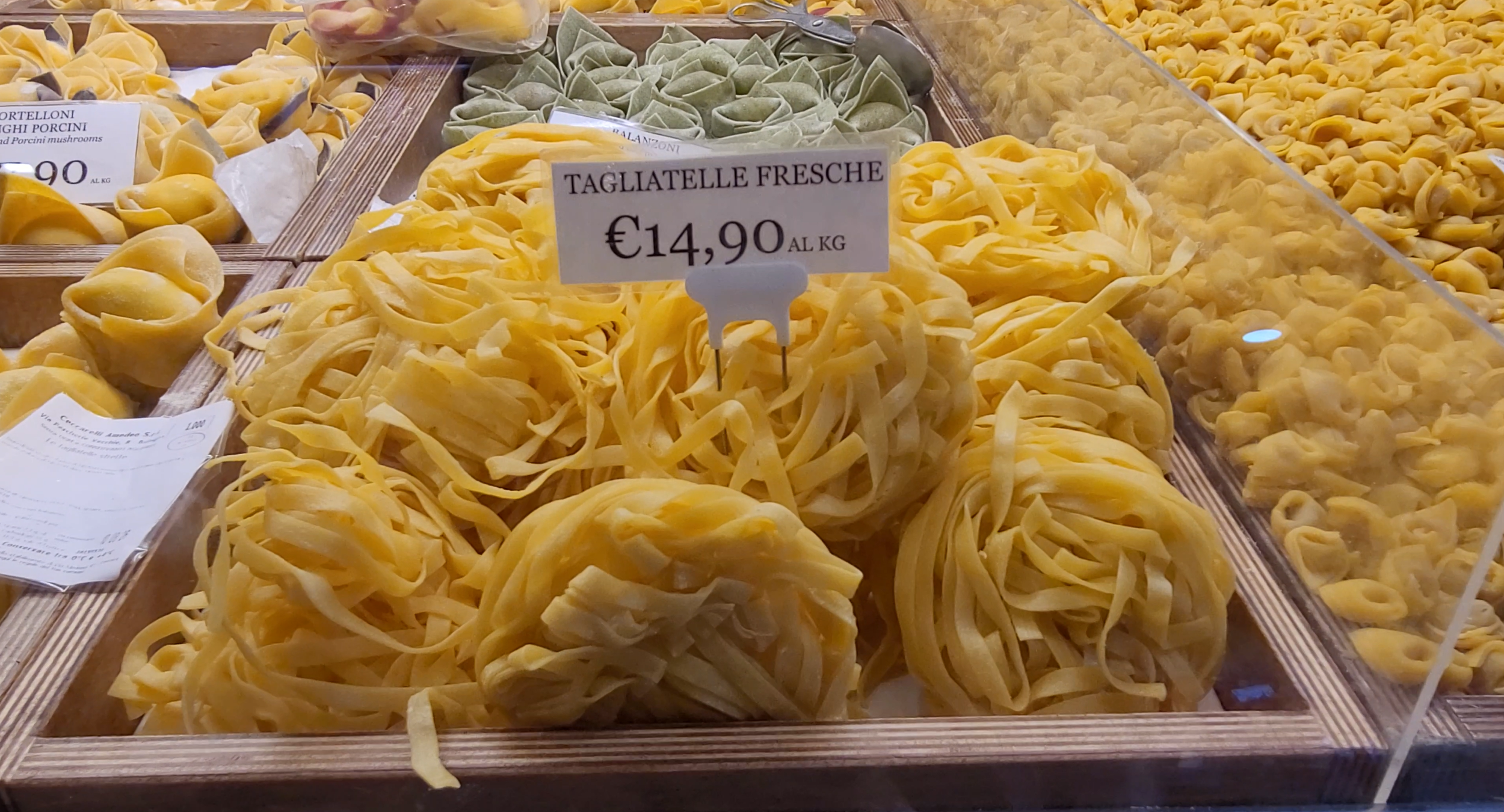
Fresh egg pasta, cured pork and a sandwich that costs less than you’d think.
Where to Stay
For several weeks, nearby supermarkets, buses and the train station can matter more than being next to Piazza Maggiore.
| Neighborhood | Best suited for | What to know |
|---|---|---|
| Historic center | First-time visitors | Central, convenient and atmospheric, but generally more expensive. |
| Santo Stefano | Couples and quieter stays | Attractive streets, restaurants and a more residential atmosphere. |
| Saragozza | Longer stays | Neighborhood conveniences, local restaurants and good walking access. |
| Bologna Centrale | Frequent day trips | Excellent railway access, although some surrounding streets are less picturesque. |
| Bolognina | Budget-conscious slow travelers | Residential, multicultural and generally less tourist-oriented. |
| University district | Travelers seeking nightlife | Lively, with affordable dining, but potentially noisy at night. |
| Via del Pratello | Food and social atmosphere | Independent restaurants and bars, with considerable evening activity. |
Getting Around Bologna
On foot, under the porticoes.
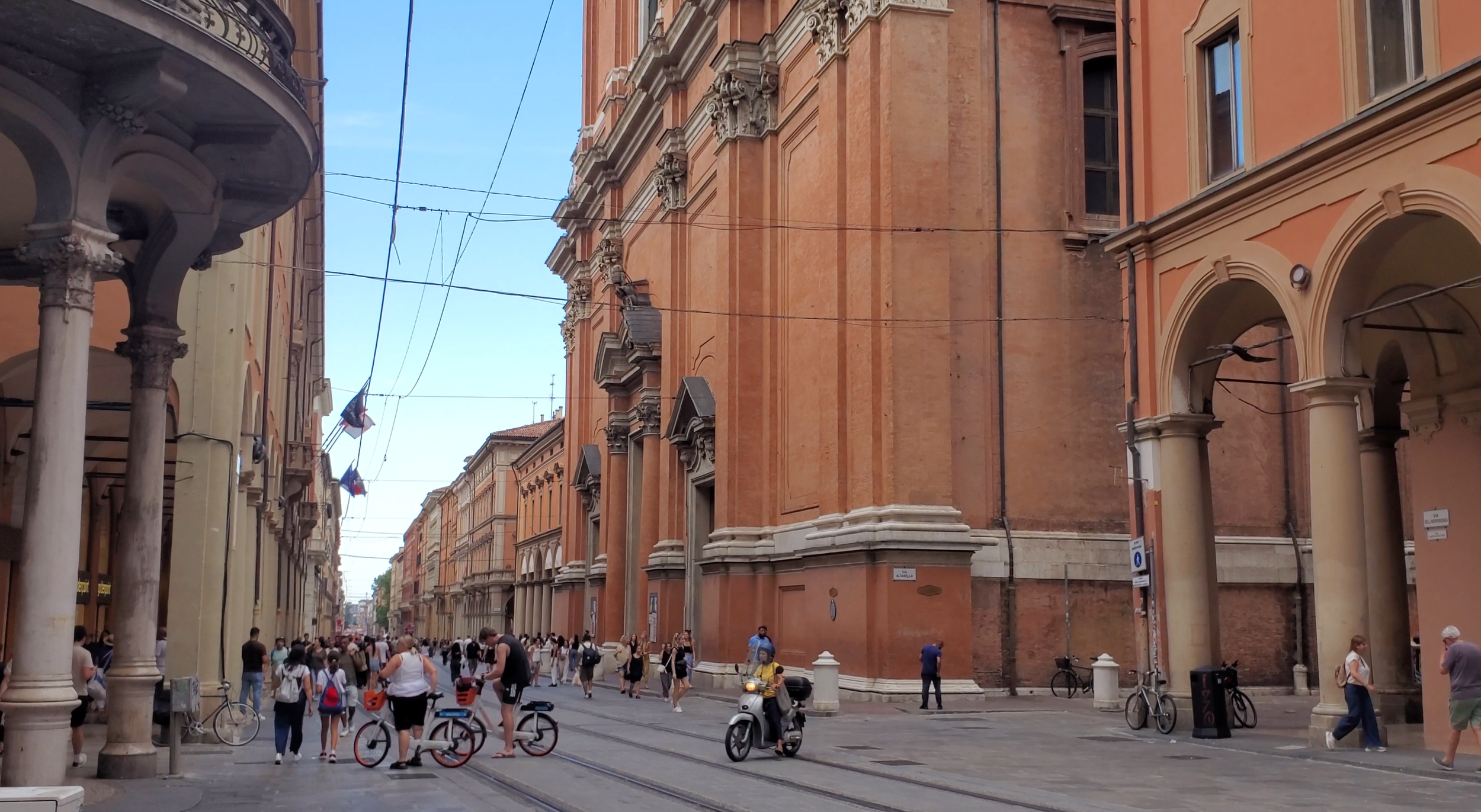
The historic center is compact enough to explore mostly on foot, and the porticoes shelter you from rain and direct sun, so walking is practical through much of the year. The center is relatively flat, although uneven paving and cobblestones are common.
Local buses connect the residential neighborhoods, the railway station, shopping areas and destinations outside the center. A car is generally unnecessary and can add complications: restricted traffic zones, parking costs and narrow historic streets.
For longer stays, the railway connections are one of Bologna’s greatest advantages. You can explore numerous surrounding cities without renting a vehicle or changing accommodations.
When to Visit Bologna
May, September and October give the best balance of weather, local activity and day trips.
Bologna is a working university city and regional capital all year, but weather, academic schedules, tourism and Italian summer holidays all change the experience.
Cold, damp and occasionally foggy, with daytime temperatures around 43–52°F. The porticoes make rainy-day walking easier, and the cuisine suits the season. Accommodation may be cheaper outside Christmas, major exhibitions and special events. Good for food, museums, architecture and everyday life rather than outdoor dining.
Increasingly comfortable temperatures and longer days, with more outdoor café life. May is especially appealing, with daytime highs often in the low to mid-70s°F. The university is active and day trips are easy. Prices can rise around Easter, public holidays and major trade fairs.
Hot and humid, with July and August regularly above 86°F. There is no consistent sea breeze, and the Po Valley can intensify the heat, so air-conditioned accommodation matters on a longer stay. Around Ferragosto on August 15, independent restaurants and shops may close for days or weeks and many residents and students leave.
September and October are particularly attractive, with more comfortable walking temperatures and a returning university population. Businesses reopen after the summer closures and the region enters its autumn food and harvest season. November is cooler, wetter and darker, though the city stays active.
How to Get to Bologna
One of Italy’s most important railway hubs.
Bologna Guglielmo Marconi Airport (BLQ) is the most convenient arrival airport, but travelers from the U.S. will generally connect through another European city such as Frankfurt, Munich, Amsterdam, Paris, London or Rome. Flying into Milan or Rome and continuing by high-speed train is another practical option, particularly when airfare is much cheaper. Bologna Centrale is about an hour from Milan Centrale and two to two and a half hours from Rome Termini.
Bologna has direct flights from numerous European cities, including major and budget airlines, and the airport is relatively close to the center. Train travel is particularly convenient from elsewhere in Italy or neighboring countries. Journeys from Switzerland, Austria, Germany and France generally take more planning and may involve connections.
The Marconi Express connects the airport with Bologna Centrale in about seven minutes of onboard time. It is convenient if you are staying near the station or continuing by train, although the fare can feel expensive for such a short ride. A taxi is more direct if you have luggage or are staying farther from the station. For two people, compare the combined train fares with a taxi.
From other parts of Italy
| Departure city | Approximate fastest train journey |
|---|---|
| Florence | 35–40 minutes |
| Milan | 1 hour |
| Padua | 1 hour |
| Verona | 50–60 minutes |
| Venice | 1 hour 30 minutes |
| Rome | 2–2.5 hours |
| Naples | 3 hours 30 minutes |
| Turin | 2 hours 15 minutes |
| Rimini | 55–80 minutes |
High-speed trains from Trenitalia and Italo are generally the quickest for longer journeys. Regional trains are often cheaper for shorter distances and nearby day trips.
Back to top ↑Other Practical Things to Know
Essential for comfortable summer stays. Confirm that it serves the bedroom as well as the main living area.
Traditional restaurants often close between lunch and dinner, with evening service starting around 7 or 7:30 p.m.
Check individual businesses before visiting, particularly around Ferragosto.
Bologna hosts major exhibitions that can dramatically increase accommodation prices.
Supermarkets, independent food shops and neighborhood markets make self-catering straightforward.
University neighborhoods and streets with popular bars can stay lively well into the night.
Three or four days covers the main attractions, but several weeks gives a more complete experience of the city and the surrounding region.
The center is relatively flat, though uneven paving and cobblestones are common.
Accommodation charges may not include the local tourist tax.
What It Cost Us
Two people · 28 nights
Total for two people: $4,575 for 28 nights · about $163 a night
Our spending for one month in one apartment.
The apartment was nearly 65% of everything we spent. Food and transportation cost less than we expected.
Who Will Enjoy Bologna Most?
Bologna suits travelers who enjoy traditional food, historic architecture, walkable neighborhoods and everyday Italian life. It has enough to keep you occupied without making every day about sightseeing. It is also an excellent fit for retirees and slow travelers who prefer to stay in one place and explore the region by public transportation.
If you want beaches, dramatic natural scenery, luxury shopping or an exceptionally quiet environment, other Italian destinations may suit you better. Bologna’s strengths are its food culture, convenience, neighborhood life and regional access.
Back to top ↑