
Milan, Italy — A Short Stay That Works Best With Two Big Bookings
Milan felt easiest when we treated it like this: lock the Duomo + The Last Supper first, keep your base near transit, and let the evening be flexible.
Full video: Milan from France — What We Found on a Short StayMilan from France — What We Found on a Short Stay
Getting Oriented in Milan
Milan can be a smooth short stay if you give the day a backbone. The Duomo area is the obvious center point, and The Last Supper is the separate, time-sensitive commitment. Once those two are set, Milan becomes less about “doing everything” and more about moving calmly between a few high-impact places.
We came in by train from Lyon and used Milan to split a longer journey on the way to Rome. The ride was about 4.5 hours. That “break the trip in half” approach is one of the best reasons to do Milan as a two-night stop.
Milan is a major Italian rail hub. High-speed trains from cities like Florence (about 1h45m), Venice (about 2h30m), and Rome (about 3h) commonly arrive into Milano Centrale or Milano Porta Garibaldi, which makes Milan an easy “add-on” or mid-route stop.

Choosing an Area to Stay
For a short stop, staying near Milano Centrale is the easiest choice because it keeps arrival and departure simple and puts you on direct lines into the center. Station areas can be uneven in many cities, but this one felt fine for a quick stay when your priority is efficiency and good transit access.
We stayed at iQ Hotel Milano directly across from Centrale. It was simple and exactly what we needed: good shower, good bed, and a complimentary mini-bar that was restocked daily. That meant we could grab water and snacks each morning without thinking about it, which is a small thing that makes a short stay easier.
Our two-night hotel total was about $400 (roughly $200/night). For how much time it saved—especially in the heat—it was worth paying for the location.
Getting Around Milan
Milan’s metro was easy to use, and we could pay by tapping our phone wallet at the turnstiles. A single ride is €2.20 and covers up to 90 minutes, including changes, which makes the system feel generous for short hops across the city.
There is also a 24-hour pass (about €7.60). We were told the system can cap your daily spend, but it only tracks you correctly if you tap in and tap out consistently. We ended up paying for a ride we didn’t take because we apparently failed to tap out at one point, and the system treated it like a different trip.
If you don’t want to think about fare math or worry about missing a tap, buy the 24-hour pass upfront. If you do tap-to-pay, make it a ritual: tap in, then tap out every time, even when you’re tired or moving fast.
We also found that walking works well in the center, but the metro becomes the difference between “fun” and “miserable” during heat. From Centrale to the Duomo area, the walk was about 37 minutes, while the metro was about 12 minutes.
Back to top ↑Top Places to See Without Overplanning
Duomo di Milano (rooftop terraces + below)
The Duomo is an experience in layers. The rooftop terraces are the payoff—spires up close, details everywhere, and city views that make the visit feel complete. We bought fast-pass tickets with elevator access and were glad we did, because once you’re up there you still climb stairs, and the sun can be intense.
One practical note: after coming down from the terraces, the cathedral and attached areas can pull you into a “finish it all now” flow. If you know you’ll want a break for lunch, plan that before you commit to the interior/archaeological route.

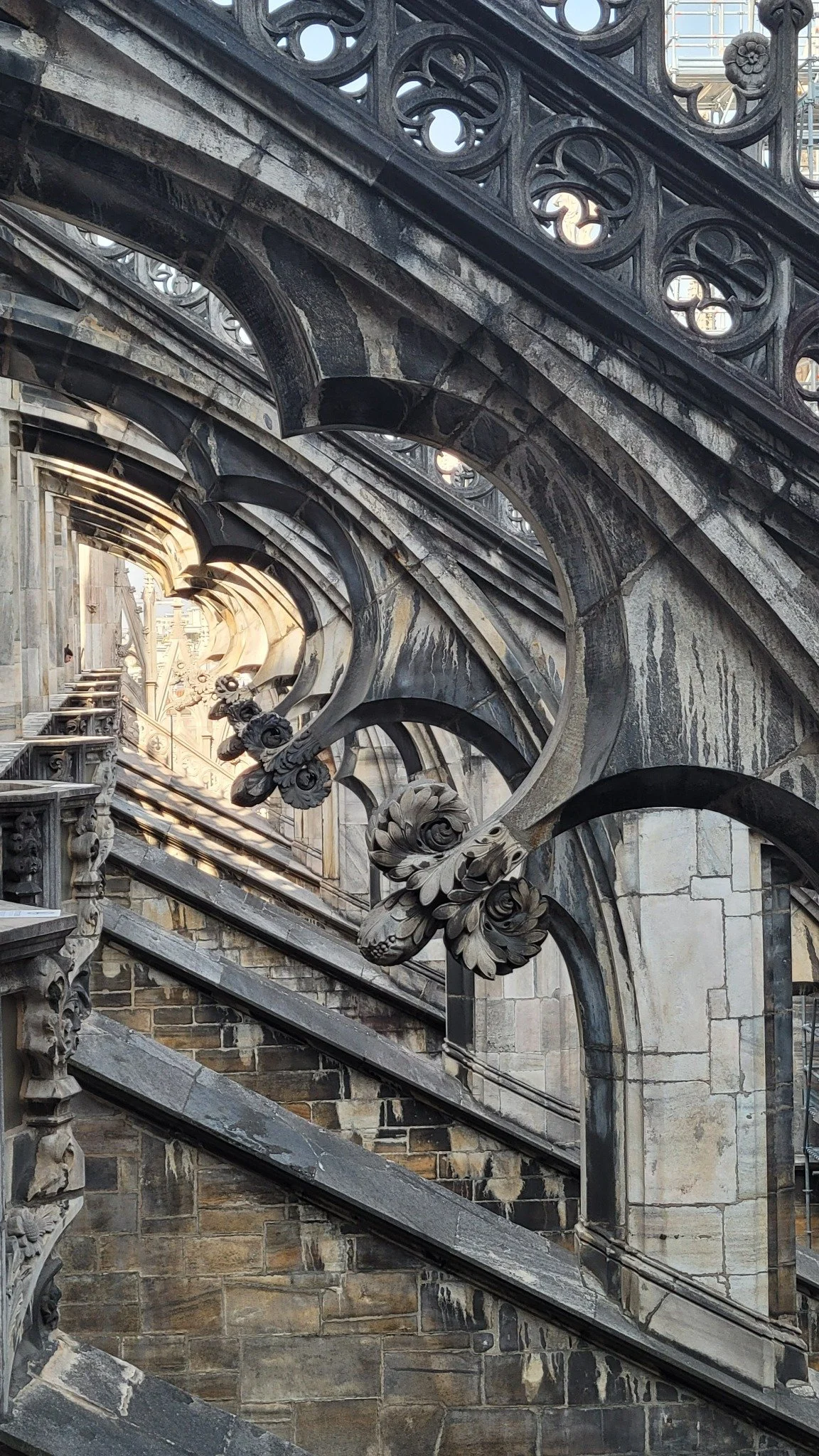
The archaeological area under the Duomo is genuinely interesting and also a relief from heat when the terraces are blazing. If you want depth beyond the rooftop, this is the easiest place to get it.
Leonardo da Vinci’s “The Last Supper”
Getting tickets felt like buying concert seats: you have to be ready right when they release, and you often need to plan months ahead. The viewing itself is short, but it’s a rare thing to see in person. We paid for the English guided visit (about €25 each), and the guide made the experience far more meaningful because you understand the preservation and what it survived.
Navigli (the flexible evening)
If you only choose one neighborhood to “just wander,” Navigli works well in the evening. It shifts the mood from formal, central Milan to something more relaxed and social. It’s a good place to decompress after timed entries and heat.
Eating in Milan
On a short stay, food is less about hunting the “best meal” and more about supporting your day. We started near the Duomo with coffee and cornetti, and it worked because it was quick and didn’t break the rhythm. We paid about €5 for two coffees and two cornetti, which was a good value in the center.
Between timed attractions, we looked for places that were fast, crowded for the right reasons, and easy to order. A busy sandwich shop can save you from a long sit-down meal when you’re watching the clock. We found a popular sandwich spot (Cesarino) when we were starving and needed something that would get us back on schedule.
If you want a more local feel, avoid chain-style places where you order only via app and the meal feels impersonal. Look for bustling trattorias with paper menus and a cashier; even if they switch to English quickly, the whole experience usually feels more rooted in place.
Aperitivo is an easy Milan win. Pick a neighborhood like Navigli, order a drink, and let the food be simple. It’s a low-effort way to feel like you’re actually in the city, not just moving between sights.
Practical Tips
Book the big items first
The Last Supper is the trip-defining reservation. Once you secure that time slot, everything else can be flexible. Duomo rooftop tickets are also worth buying ahead if you want a specific time and elevator access.
Carry a real portable charger
Bring a high-capacity portable battery. Your phone is your ticket, your map, and your translator, and public outlets are rarely available when you need them most. Having backup power removes a surprising amount of stress.
Treat “tap out” as part of the ride
If you pay with your phone/card, tapping out is not optional. It’s easy to miss when you’re funneled through multiple gates, but it can lead to unexpected charges.
What our quick stop cost
Our total for Milan came to about $700 for two people, including the hotel plus the Duomo and The Last Supper. For a two-night stop on the way to Rome, it felt like a strong use of time and money.
Back to top ↑