
Sète — A Real Place That Happens to Have Beaches
Saltwater, diesel, grilled seafood, and sea air within a few blocks of each other. A working fishing port, a Mediterranean beach city, and a canal town with Italian roots — all at once.
Getting Oriented in Sète
A narrow strip of land between two very different bodies of water — that geography explains almost everything.
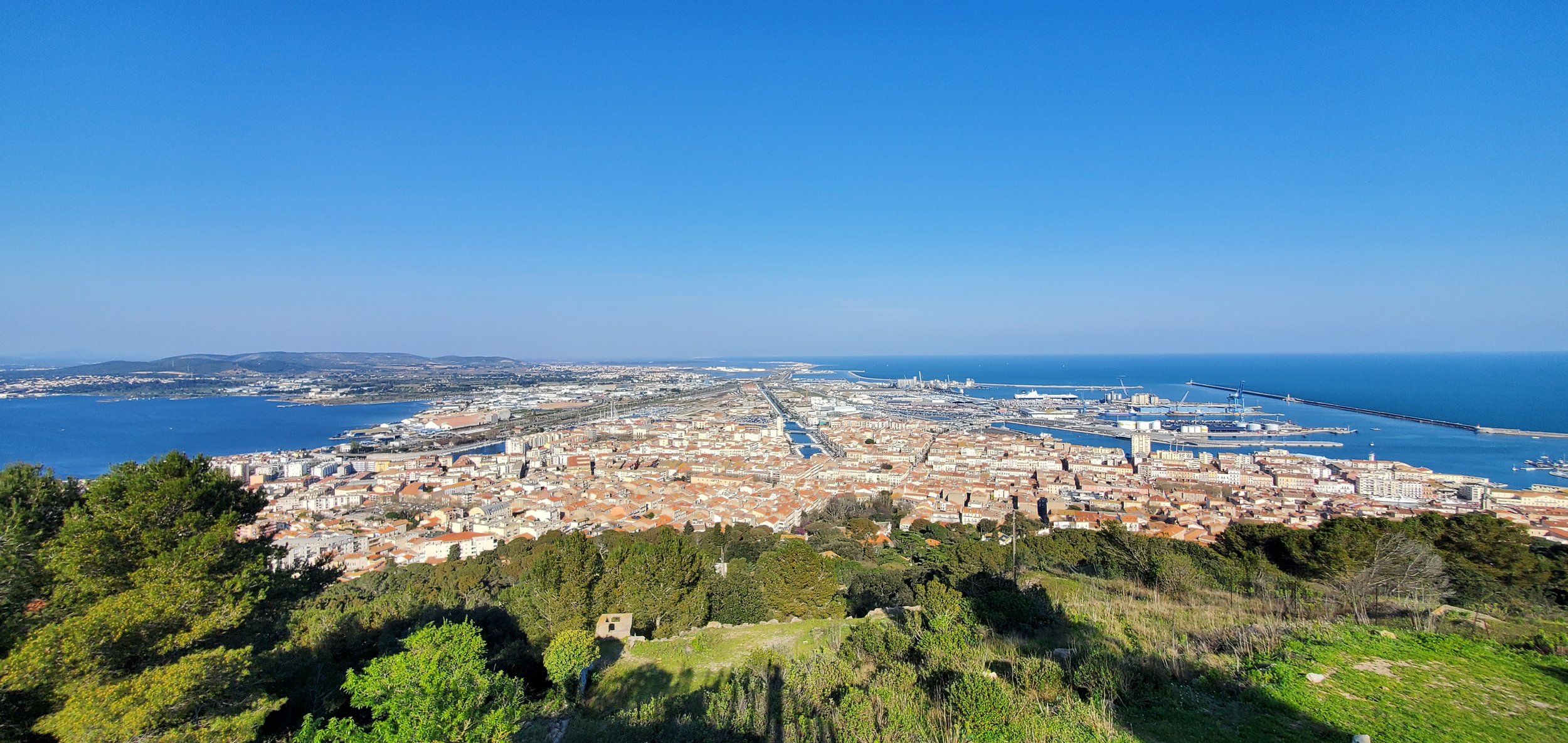
Sète is built on a narrow strip of land squeezed between the Mediterranean to the south and the Étang de Thau lagoon to the north. A single steep hill — Mont Saint-Clair — rises above the whole city. Climb it once early and the rest of the city makes sense.
It is often called the "Venice of Languedoc" because of its canals, but they feel used rather than ornamental. Fishing boats sit beside café terraces. Locals cross small bridges on errands. The seagulls are loud. Turn one corner and you get a cinematic canal view. Turn the next and you find fishermen repairing nets outside a bar. The city never feels entirely curated.
The canal-side center is where the restaurants, the covered market, and most of the daily atmosphere sit. The Corniche and beaches stretch south. The lagoon and oyster villages are north and west. Most of what you want is walkable from a central base.
Mediterranean, Corniche, sandy beaches, fishing port. The louder, more active, summer-facing side.
Étang de Thau, oyster farms, flamingos, quiet villages. Calmer and unhurried even when the beaches are packed.
Where to Stay
The choice comes down to what you want outside your door each morning.
Sète splits cleanly into two base options depending on what matters more to you.
Restaurants, markets, and atmosphere
The better base if you want the covered market, canal walks, and restaurant options immediately outside. Without a car, this keeps logistics simple and puts you in the part of Sète that feels most like itself. The tradeoff is some noise in the busier pockets — choose a side street if that matters.
Swimming and sea views
The better base if the beach is central to why you're here. You trade some canal atmosphere for easier morning access to the water. More relevant in summer; in winter or spring it can feel removed from where the action is.
Getting Around Sète
Walkable in the center. Steep in one direction. Parking is a problem in summer.
Winter Quiet fishing town
Spring Sweet spot
Summer Loud, crowded, alive
The biggest difference: in winter the working-port side dominates; in summer the beach-town side takes over. Spring gives you the best mix of both.
Top 5 Things to See in Sète
Spread between the hill, the canals, the port, and the lagoon — each one a different side of the same city.
Mont Saint-Clair
From the top you can see the fishing port, the Mediterranean, the inland lagoon, and the narrow strip of land the city sits on — all at once. Near sunset the light turns the canals copper and the fishing boats glow against the water.
The Canal Network in the Old Town
The canals don't feel polished or theatrical — they feel lived-in. Fishing boats idle beside cafés, locals haul supplies across small bridges, and seagulls are overhead while people drink espresso along the quays. Wandering slowly without a plan is the right approach.
The Fishing Port
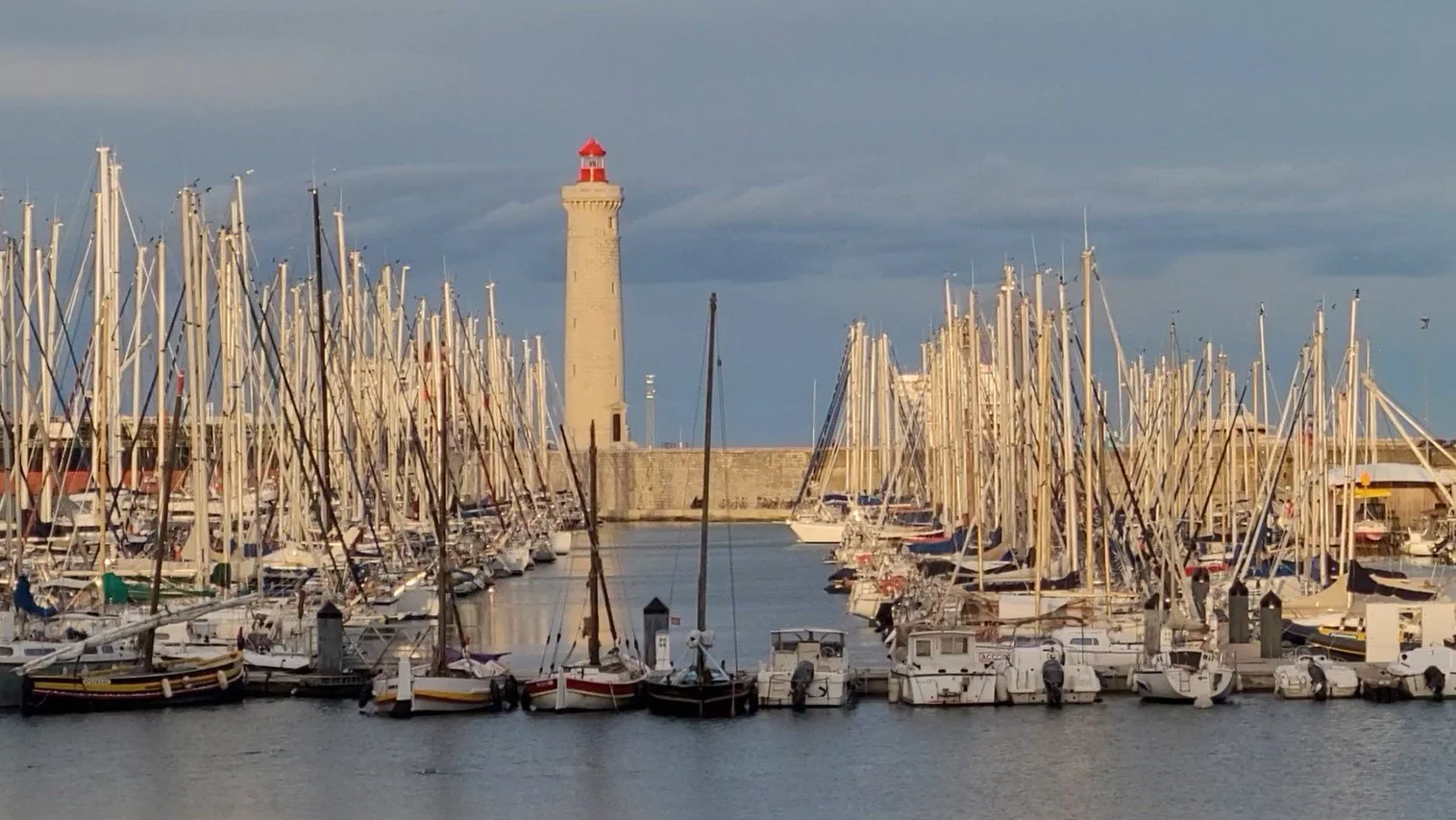
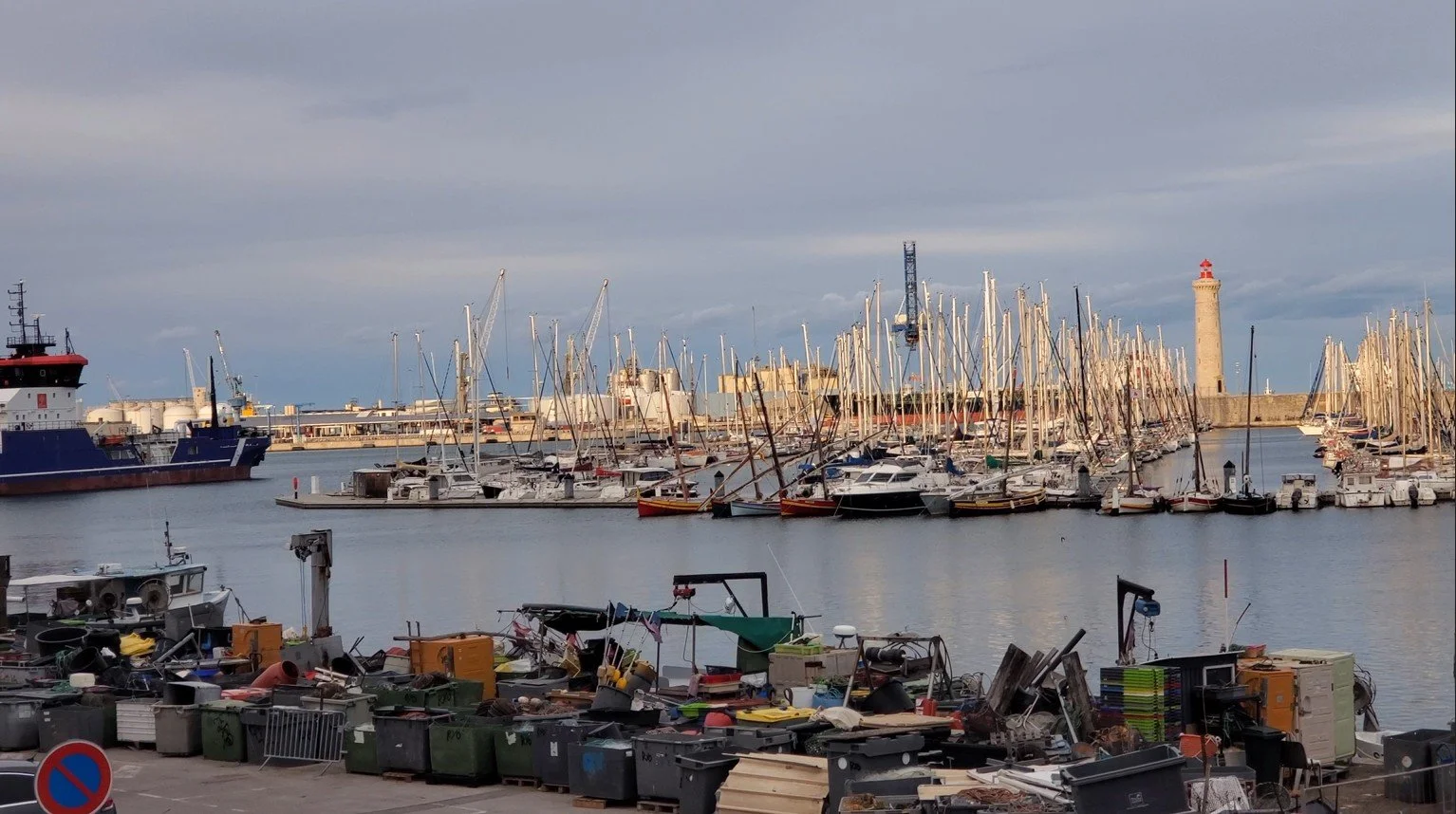
One of the few places on the French Mediterranean coast where the fishing industry still feels central rather than decorative. Early mornings: boats unloading catches while restaurants prepare for lunch nearby. Salt, diesel, and seafood in the air — authentic rather than curated.
Saint-Louis Lighthouse and Breakwater
Walking the long breakwater toward the lighthouse, the waves crash against the rocks, the wind is constant, and the city slowly shrinks behind you. On stormy days the atmosphere is dramatic. It makes clear why Sète has always depended on the sea.
The Étang de Thau Lagoon
The lagoon has a completely different mood from the sea-facing side — calmer water, oyster farms stretching into the distance, flamingos feeding in the shallows while fishermen work nearby. Small villages along the edge feel unhurried, especially late afternoon.
Top 5 Things to Eat in Sète
Fishing culture and Italian immigrant history in equal measure. Most of it is inexpensive and available everywhere.
Tielle Sétoise
Sète's signature dish — a round savory pie filled with octopus in spicy tomato sauce. The crust is slightly chewy and stained orange-red from the filling. It reflects Italian immigrant history as much as fishing culture. Every bakery has its own version and locals argue about which is best.
Fresh Oysters from the Étang de Thau
Smaller and often sweeter than Atlantic oysters, with a briny but delicate flavor shaped by the lagoon. Many producers serve trays right beside the water where they were harvested that morning. Most locals keep the preparation simple.
Bourride
A Mediterranean fish stew, but the Sète version stands apart because of its garlicky aioli-based broth — creamy, fragrant, and intensely seafood. Served with toasted bread rubbed with garlic. Tied directly to the working fishing culture.
Moules Farcies
Stuffed mussels that many visitors overlook. Filled with sausage, herbs, garlic, and breadcrumbs, then baked. Rustic and homey — unmistakably southern French.
Macaronade Sétoise
Nothing to do with dessert macarons. A pasta dish with slow-cooked tomato sauce and beef or sausage. The Italian influence woven through Sète's history shows up clearly here — it tastes more like Sunday food than restaurant food.
Les Halles Covered Market
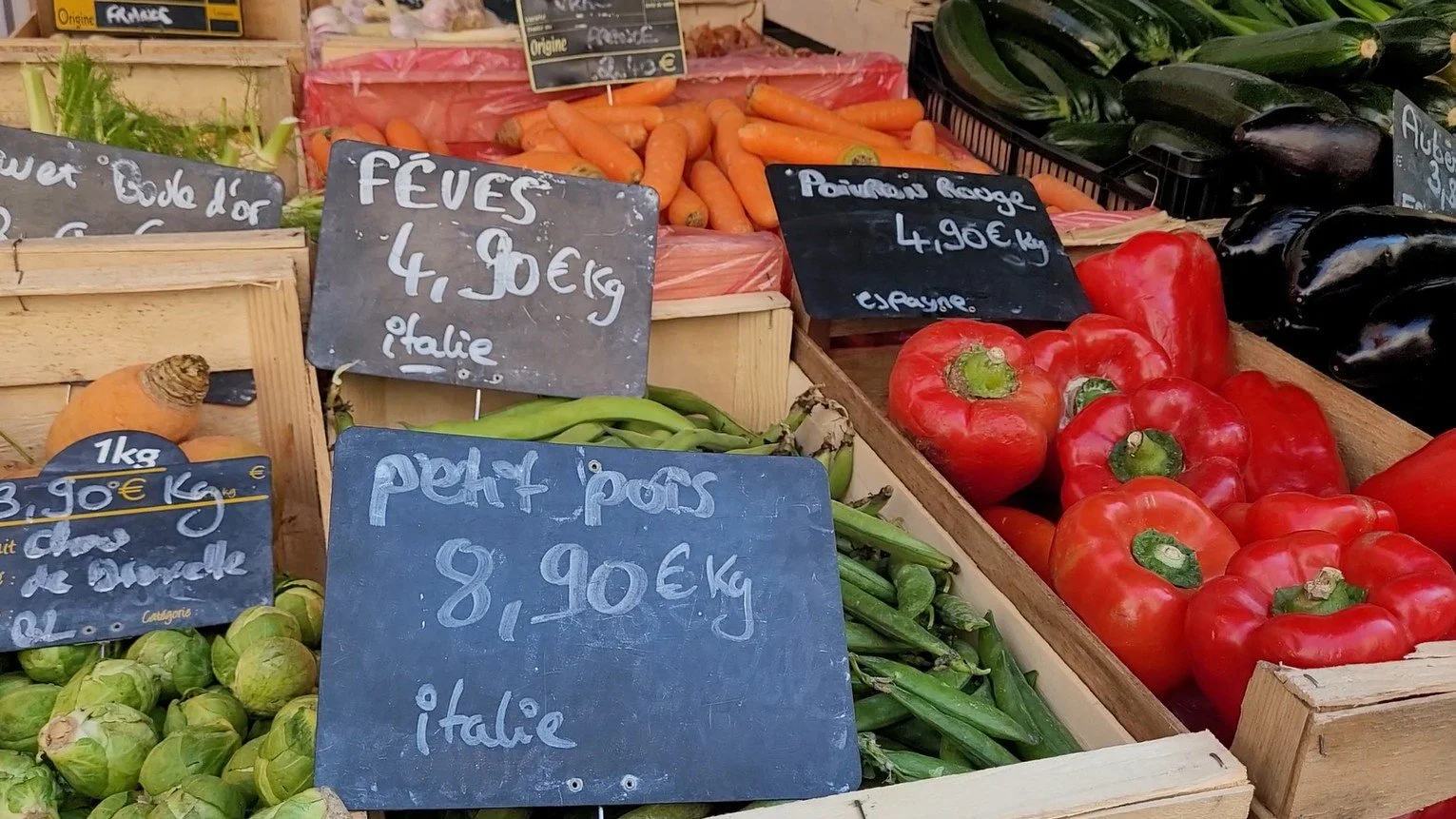
Olives, fresh fish, cheeses, pastries, spices, and local wines. Regulars stop for coffee or small plates. Lively without feeling overly touristy. Go hungry — the sampling adds up fast.
Top 5 Things to Do in Sète
The experiences that make it feel like a place rather than a stop.
Many producers along the Étang de Thau serve trays beside the water where the shellfish were harvested that morning. Pair with chilled local white wine while boats drift nearby.
Sète has a centuries-old tradition of jousting where competitors on boat platforms try to knock each other into the canal with long lances. Crowds line the canals, bands play loudly, and the whole city feels energized. It still belongs to locals more than visitors.
The Corniche connects beaches, rocky shoreline, cafés, and walking paths along the sea. In the evening locals come out to walk, swim, or sit facing the water as the temperature drops. Relaxed rather than flashy — nothing like the Riviera towns farther east.
One of the best windows into daily life in Sète. Vendors sell olives, fresh fish, cheeses, pastries, and local wines while regulars stop for coffee or small plates. Go hungry.
Wide, sandy, and relaxed for the south of France. Families and locals mix without the luxury-club atmosphere found elsewhere along the Mediterranean. Late September can be ideal — the sea stays warm while the crowds drop off dramatically.
How to Get to Sète
One extra train leg after your main arrival city. The connections are straightforward once you know the routing.
Fly into Paris, Barcelona, or Marseille. Paris gives you the most flight options. Barcelona can work if fares are better. Marseille is often the simplest southern-France arrival. From any of these, aim for a train to Sète station — usually via Montpellier, Béziers, or Nîmes. Avoid renting a car just to reach Sète unless you are planning a wider regional road trip.
Train is usually the best option. Sète sits on the rail line between Montpellier, Béziers, Narbonne, Perpignan, and Barcelona — it connects well with southern France and northeastern Spain. Flying into Montpellier, Marseille, Toulouse, or Barcelona can also work depending on price. Once in the region, train is easier than dealing with parking.
From Paris, take the TGV toward Montpellier, Béziers, or Perpignan, then connect to Sète. From Lyon, the train goes through the Rhône Valley toward Montpellier. From Nice or Provence, train works but is slower heading west along the coast. From Bordeaux or Toulouse, expect a route through Narbonne, Béziers, or Montpellier.
Go expecting character, not perfection.
Sète works best for travelers who enjoy working ports, seafood, markets, beaches, and places with a slightly rough edge. It will disappoint someone expecting a polished Riviera resort. The charm is in the mix: fishing boats, canals, food with Italian roots, sandy beaches, lagoon villages, and local festivals that still belong to residents. It feels like a real place that happens to have beaches — not a beach resort pretending to be a real place.
↑ Back to top